



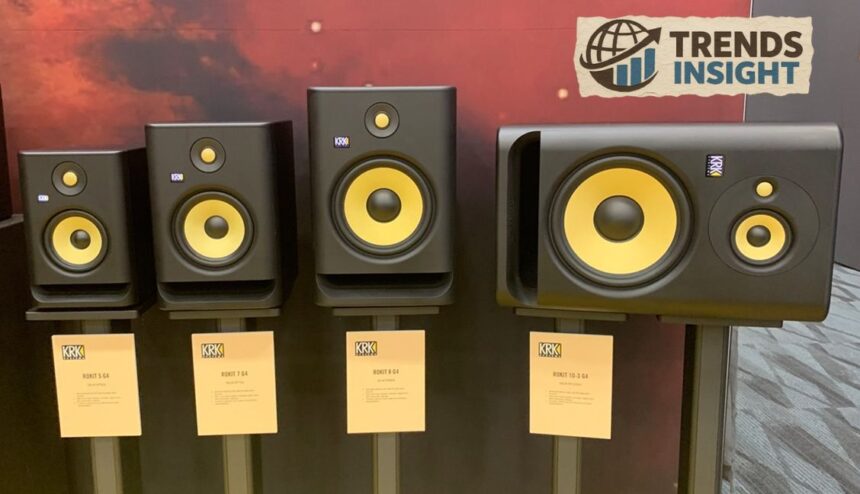
The KRK Rokit 5 G4 has become one of the most recognizable compact studio monitors for home producers, beat makers, musicians, and recording enthusiasts. Its distinctive yellow woofer, compact cabinet, and relatively accessible price have made it a familiar choice in bedrooms and small project studios.
- What Is the KRK Rokit 5 G4?
- Key Specifications
- Design and Build Quality
- Sound Quality
- DSP and EQ Controls
- KRK Rokit 5 G4 for Music Production
- Is It Good for a Small Room?
- Setup Tips
- Connectivity
- Advantages and Disadvantages
- KRK Rokit 5 G4 vs Older Rokit Models
- KRK Rokit 5 G4 vs Modern Alternatives
- Who Should Buy the KRK Rokit 5 G4?
- Who Should Look Elsewhere?
- Is the KRK Rokit 5 G4 Worth Buying Today?
- Final Verdict
- Car Max vs Other Dealers: Which Option Is Right for You?
But popularity alone does not make a studio monitor a good investment. A monitor needs to provide enough detail, balance, low-end control, and consistency to help you make better production decisions. That is especially important when mixing, because a speaker that sounds exciting can sometimes make a mix appear better than it actually is.
The Rokit 5 G4 was designed to address some of those concerns. KRK introduced matching Kevlar drivers, a redesigned enclosure, a front-firing port, and DSP-based room-tuning controls. Independent reviews have also praised its clarity, bass response, stereo imaging, and performance in smaller rooms.
So, is the KRK Rokit 5 G4 still worth buying today? The short answer is yes for the right user, particularly someone building a compact home studio. However, room size, placement, listening goals, and the availability of newer alternatives should all be considered before making a decision.
What Is the KRK Rokit 5 G4?
The KRK Rokit 5 G4 is a 5-inch active two-way studio monitor from KRK’s fourth-generation Rokit range. It is designed to work as a nearfield monitor, meaning it is intended to be listened to from a relatively short distance rather than used as a large-room speaker.
Unlike passive speakers, the Rokit 5 G4 contains its own amplification. KRK specifies a combined 55 watts of Class D amplification, with separate amplification for the woofer and tweeter. Its published frequency range is 43 Hz to 40 kHz, while the maximum SPL is rated at 104 dB.
The speaker uses a 5-inch Kevlar woofer and 1-inch Kevlar tweeter. Using matching materials for both drivers was one of the important design changes in the G4 generation. KRK says this matching-driver approach helps provide consistent sonic character across the frequency range.
It is also worth remembering that the Rokit 5 G4 is a studio monitor, not simply a consumer entertainment speaker. Its purpose is to give producers and engineers a useful reference while creating and mixing music.
Key Specifications

The specifications help explain why the monitor is particularly attractive for smaller studios.
| Feature | KRK Rokit 5 G4 |
|---|---|
| Monitor type | Active two-way studio monitor |
| Woofer | 5-inch Kevlar |
| Tweeter | 1-inch Kevlar |
| Amplification | 55W combined Class D |
| Frequency response | 43 Hz–40 kHz |
| Maximum SPL | 104 dB |
| Input | Balanced XLR/TRS combo |
| Height | 285 mm |
| Width | 190 mm |
| Depth | 241 mm |
| Weight | 4.85 kg |
| EQ | DSP-driven graphic EQ |
| EQ settings | 25 settings |
These specifications are based on KRK’s product information and are also consistent with independent reviews of the model.
Design and Build Quality
The Rokit 5 G4 keeps the recognizable KRK appearance while introducing a redesigned cabinet. Its black enclosure and yellow driver give it a distinctive appearance that stands out from many traditional studio monitors.
The cabinet measures approximately 285 × 190 × 241 mm, making it relatively easy to accommodate on a typical studio desk. At around 4.85 kg per speaker, it is also manageable to move when experimenting with placement.
One particularly useful design feature is the front-firing bass port. A front port can make positioning somewhat easier than a rear-ported design because the port is not directly firing toward the wall behind the speaker. That does not mean you can place the monitors anywhere, but it can be helpful in compact rooms where positioning options are limited.
KRK also includes a high-density Iso-foam pad underneath each monitor. The pad is intended to reduce vibration transmitted from the cabinet to the desk or other supporting surface.
Sound Quality
Sound quality is where the KRK Rokit 5 G4 becomes particularly interesting.
Earlier Rokit models developed a reputation for emphasizing bass and offering an enjoyable, energetic presentation. The fourth-generation design moved toward a more controlled and detailed sound. Independent testing from Recording Magazine described the G4 as offering improvements in clarity, low-end character, and headroom compared with earlier generations.
MusicRadar similarly praised the monitor for its detailed sound, wide sweet spot, and cohesive presentation, particularly in smaller studio environments.
Bass Response
For a monitor with a 5-inch woofer, the low end is one of its most impressive characteristics.
KRK rates the Rokit 5 G4 down to 43 Hz, which gives it useful low-frequency extension for a compact nearfield monitor.
You can expect kick drums and bass instruments to have a noticeable presence without immediately requiring a subwoofer. That can be valuable for electronic music, hip-hop, pop, rock, and other styles where low-frequency information plays an important role.
However, a strong low end does not mean the monitor can replace a properly treated room. Small rooms often create standing waves and bass buildup, so what you hear at the listening position may be influenced as much by the room as by the speaker.
Midrange and Vocals
The midrange is particularly important when mixing vocals, guitars, keyboards, snares, and many other instruments.
The G4’s matching driver design contributes to a cohesive presentation. Recording Magazine noted that the G4 offered a more open and detailed high end while also improving the definition of its low-frequency presentation compared with earlier Rokit generations.
For a home producer, that can make it easier to hear competing elements in a busy arrangement. You can better judge whether vocals are sitting correctly, whether instruments are masking one another, and whether a mix needs more or less midrange energy.
High Frequencies
The tweeter provides the detail needed to hear percussion, vocal presence, effects, and other high-frequency information.
Independent testing found the high end of the G4 to be more open and detailed than previous models without becoming excessively harsh.
That is important because a monitor that exaggerates treble can quickly become tiring during long sessions. The Rokit 5 G4 generally aims for a detailed presentation that remains usable over extended production sessions.
DSP and EQ Controls
One of the most distinctive features of the KRK Rokit 5 G4 is its DSP-driven graphic EQ.
KRK provides 25 EQ settings designed to help users adapt the monitors to different acoustic environments. The controls are accessed through the rear-panel interface and LCD display.
This feature is useful because no two rooms behave exactly the same way. A speaker placed on a desk in a small bedroom can sound very different from the same speaker placed on stands in a treated studio.
For example, a room may produce excessive low-end buildup near a wall. The monitor’s EQ controls can help reduce some of that effect. The manual also describes low-shelf settings for wall coupling and a desk-related parametric adjustment intended to address low-mid buildup.
However, DSP should not be viewed as a substitute for acoustic treatment. EQ can help manage the speaker’s response, but it cannot completely eliminate problems such as reflections, room modes, poor speaker placement, or excessive reverberation.
KRK Rokit 5 G4 for Music Production
The Rokit 5 G4 is especially well suited to home music production.
Its compact size makes it practical for bedroom studios, small production rooms, and desktop setups. The 5-inch woofer also provides enough low-end information for many producers without taking up the physical space required by larger monitors.
Beat makers can benefit from its punchy bass presentation, while vocal producers can use its detailed midrange and high frequencies to make decisions about vocal placement and processing.
For mixing, the monitor’s relatively wide sweet spot is another advantage. MusicRadar found the stereo image and listening area impressive for a monitor in this class.
Still, producers should avoid judging a mix exclusively through one pair of monitors. A strong workflow involves checking the final mix on headphones, earbuds, car speakers, consumer speakers, or other systems.
Is It Good for a Small Room?
Yes, and this is one of the strongest use cases for the KRK Rokit 5 G4.
The monitor is compact enough for smaller spaces, and its output level is appropriate for typical nearfield listening. MusicRadar specifically described it as a strong option for bedroom and small-studio mixing, while noting that larger Rokit models are more suitable for bigger rooms.
The key is proper placement.
Ideally, the left and right monitors should form an approximately equal triangle with your listening position. The tweeters should be positioned around ear level, and the speakers should be aimed toward your listening position.
Avoid pushing the monitors directly into corners. Walls and corners can significantly change bass response, which can lead you to make incorrect decisions while mixing.
Setup Tips
A good monitor can still sound disappointing when it is poorly positioned.
Start by placing the two monitors symmetrically around your listening position. Keep the distance from each monitor to your ears as similar as possible. Angle the speakers toward your listening position and ensure that the tweeters are appropriately aligned with your ears.
The included Iso-foam pads can help reduce vibration between the speakers and your desk.
Next, spend time experimenting with the DSP settings. Do not immediately boost or cut frequencies simply because one setting sounds more exciting. The objective of a studio monitor is not necessarily to make music sound impressive; it is to help you make reliable production decisions.
Connectivity
The rear panel provides a balanced XLR/TRS combo input, allowing the monitor to connect to common audio interfaces and studio equipment.
One notable change from some previous Rokit generations is the removal of RCA connectivity. The G4 instead focuses on the balanced connection format typically associated with studio equipment.
For most home-studio users with an audio interface, this is unlikely to be a major limitation. However, anyone planning to connect the speakers directly to basic consumer equipment should check compatibility before purchasing.
Advantages and Disadvantages
The biggest advantage of the KRK Rokit 5 G4 is its combination of compact size, useful low-end response, detailed sound, and DSP functionality.
The monitor provides features that are genuinely useful for home production rather than simply adding unnecessary complexity. The 25-setting EQ system is particularly helpful when working in rooms where acoustic conditions are less than ideal.
Its front-firing port and Iso-foam base are also practical touches. Independent reviews have praised its soundstage, clarity, and performance in smaller environments.
There are limitations, though.
The 5-inch design is not intended to fill a large studio with powerful sound. If you work in a large room or regularly mix at high listening levels, a larger monitor may be a better choice.
Another limitation is that DSP cannot fix a fundamentally poor acoustic environment. You still need sensible speaker placement and, where possible, acoustic treatment.
KRK Rokit 5 G4 vs Older Rokit Models
The fourth-generation model represents a meaningful redesign rather than a simple cosmetic update.
The move to matching Kevlar drivers, the redesigned cabinet, front-firing port, and digital EQ system all distinguish the G4 from earlier models. Recording Magazine’s comparison with previous Rokit generations highlighted improvements in clarity, low-end feel, and headroom.
That makes the G4 particularly appealing to someone upgrading from an older Rokit monitor.
However, owners of functional G3 monitors do not necessarily need to upgrade simply because the G4 exists. The improvement is useful, but your room, monitoring technique, and overall production setup can have a greater impact on your results than moving from one generation to another.
KRK Rokit 5 G4 vs Modern Alternatives
The studio-monitor market has become highly competitive, and buyers now have many choices in the compact-monitor category.
Models from Yamaha, JBL, Kali Audio, Adam Audio, and other manufacturers can provide excellent results. Some emphasize neutrality, some offer different room-tuning features, and others provide different approaches to stereo imaging and low-frequency response.
The Rokit 5 G4’s strongest argument is its combination of sound, bass extension, compact dimensions, DSP controls, and established reputation.
One important consideration today is that KRK has since introduced the ROKIT Generation Five. KRK’s current Generation Five model offers three voicing modes—Mix, Focus, and Create—and 25 boundary and tuning EQ combinations.
That means buyers considering a brand-new monitor should compare the G4 with newer options rather than assuming the G4 is automatically the latest choice.
At the same time, the existence of a newer generation does not make the G4 a bad monitor. If the G4 is available at an attractive price, it can still be a compelling compact studio-monitor option.
Who Should Buy the KRK Rokit 5 G4?
The KRK Rokit 5 G4 is a strong choice for home producers, beat makers, recording musicians, content creators, and beginners building a serious desktop studio.
It makes the most sense when you have a small or medium-sized room and want more accurate monitoring than ordinary multimedia speakers can provide.
It can also work well for producers who appreciate a little more physical low-end presence while still wanting enough detail for mixing decisions.
Who Should Look Elsewhere?
You may want to consider another monitor if you work in a large room, need very high output levels, or specifically prefer a highly neutral monitoring presentation.
Likewise, if you are buying new and the price difference between a G4 and a newer generation is small, comparing both models before purchasing makes sense.
The G4 is also not a magic solution for an untreated room. If your room has serious acoustic problems, spending the entire budget on speakers while ignoring the room may produce disappointing results.
Is the KRK Rokit 5 G4 Worth Buying Today?
Yes, the KRK Rokit 5 G4 can still be worth buying today, especially when priced competitively.
Its strengths remain relevant: a compact 5-inch design, useful bass extension, matching Kevlar drivers, 55 watts of Class D amplification, a front-firing port, balanced connectivity, and DSP-based EQ adjustment. KRK’s official specifications confirm a 43 Hz–40 kHz frequency range and 104 dB maximum SPL.
Independent reviews have also consistently highlighted its detailed sound, cohesive presentation, stereo imaging, and suitability for smaller studios.
The main question is not whether the monitor is good. It is whether the G4 is the best value for your particular setup.
If you already own a good pair of monitors, upgrading simply for the sake of owning the Rokit 5 G4 may not transform your mixes. But if you are moving up from ordinary computer speakers, entry-level multimedia speakers, or an older generation of monitors, the difference can be significant.
Final Verdict
The KRK Rokit 5 G4 remains a capable and versatile compact studio monitor. It combines a recognizable design with meaningful technical improvements, strong low-frequency performance, useful DSP controls, and a detailed overall presentation.
Its greatest strength is its balance between features and practicality. It does not require a huge studio, and its 5-inch configuration makes it particularly appropriate for home production environments.
The biggest limitation is equally straightforward: it is still a 5-inch monitor. It cannot provide the same room-filling output or low-frequency authority as substantially larger monitors, and its performance will always depend on the room in which it is used.
For a bedroom studio, small production room, or desktop setup, however, the Rokit 5 G4 remains an appealing option. If you find it at a good price and understand its limitations, it can absolutely still be a worthwhile studio-monitor purchase.
Car Max vs Other Dealers: Which Option Is Right for You?
Frequently Asked Questions
Is the KRK Rokit 5 G4 good for beginners?
Yes. Its compact size, active design, useful DSP controls, and detailed presentation make it approachable for beginners who are building a first serious home studio.
Is the KRK Rokit 5 G4 good for mixing?
Yes. Its detailed sound and stereo imaging make it suitable for mixing, particularly in small and medium-sized rooms. However, proper placement and room treatment remain essential.
Does the KRK Rokit 5 G4 have enough bass?
For a 5-inch monitor, it provides impressive low-frequency extension, with KRK specifying a range down to 43 Hz. For extremely deep sub-bass work, a larger monitor or properly integrated subwoofer may eventually be useful.
Can the KRK Rokit 5 G4 work in a small room?
Yes. Its compact design and nearfield configuration make it particularly suitable for bedroom and small-studio environments.
Does the KRK Rokit 5 G4 need a subwoofer?
Not necessarily. Many producers can work effectively with the 5 G4 alone. A subwoofer becomes more relevant when you need to monitor very low frequencies accurately and have a room capable of supporting that additional low-end energy.
Is the KRK Rokit 5 G4 still worth buying?
Yes, particularly if you can get it at a good price. Although newer KRK models now exist, the G4 still offers strong specifications, useful DSP controls, and proven performance for compact studio environments.