



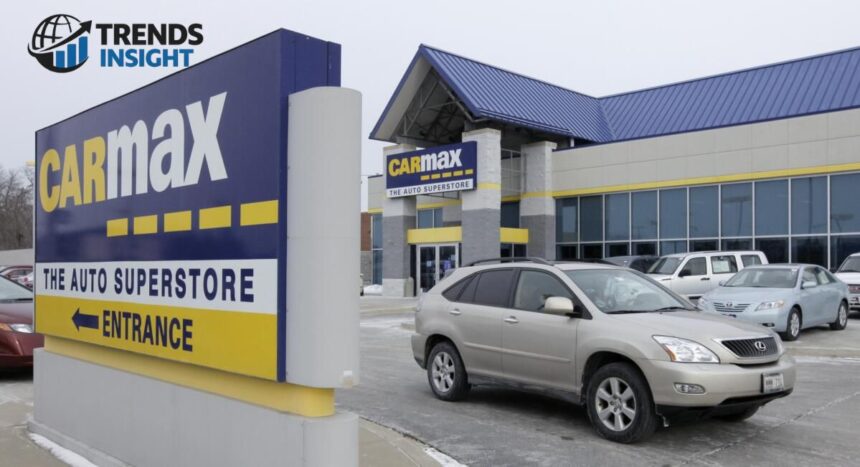
Buying a used car is a major financial decision, and choosing the right dealer can be just as important as choosing the right vehicle. Car Max has become a well-known option for shoppers who want a more straightforward buying experience, while traditional dealerships continue to attract buyers with negotiable prices, new-car inventory, manufacturer incentives, and certified pre-owned programs.
- What Is Car Max?
- How Traditional Dealers Work
- Price
- Negotiation
- Vehicle Selection
- Buying Experience
- Financing
- Trade-Ins
- Vehicle Quality
- Warranty and Return Policies
- Pros of Car Max
- Cons of Car Max
- Pros of Traditional Dealers
- Cons of Traditional Dealers
- Car Max vs Other Dealers Comparison
- Who Should Choose Car Max?
- Who Should Choose a Traditional Dealer?
- How to Make the Right Choice
- Mistakes to Avoid
- Final Verdict
- How to Choose a Baby Stroller That Fits Your Lifestyle
- Frequently Asked Questions
- Is Car Max cheaper than traditional dealerships?
- Is Car Max a good place to buy a used car?
- Can you negotiate prices at Car Max?
- Does Car Max offer financing?
- Does Car Max accept trade-ins?
- Is buying from Car Max better than a traditional dealer?
- Does Car Max offer a return policy?
- Should I get an inspection before buying from Car Max?
- What is more important: the dealer or the vehicle?
- How can I get the best deal on a used car?
So, Car Max vs other dealers: which option is right for you?
There is no single answer for every buyer. The better choice depends on your budget, financing, trade-in, preferred vehicle, willingness to negotiate, and how much you value convenience. Car Max focuses heavily on upfront pricing and a standardized buying process. Traditional dealerships can provide more opportunities to negotiate, but the experience may vary considerably from one dealer to another.
This guide compares the two options across pricing, selection, financing, trade-ins, warranties, vehicle quality, and the overall buying experience so you can make a more informed decision.
What Is Car Max?
Car Max is a large used-car retailer built around a different approach to traditional dealership sales. Instead of making negotiation a central part of the purchase, Car Max uses upfront, no-haggle pricing and gives customers the ability to shop online, visit a store, or combine both methods.
The company operates a large nationwide inventory. According to its fiscal 2026 annual report, Car Max had approximately 61,000 saleable retail vehicles in inventory as of February 28, 2026. The company also reported that customers could request transfers of vehicles between locations, giving shoppers access to inventory beyond their local store.
That scale can be useful if you have a specific vehicle in mind. Instead of limiting your search to dealerships within a few miles, you may be able to consider vehicles from a much broader inventory.
Car Max also emphasizes a standardized process. Its current customer information states that vehicles are Car Max Certified and come with a 10-day money-back guarantee and a 30-day limited warranty, although warranty periods are longer in certain states.
How Traditional Dealers Work
Traditional dealerships operate differently. A franchise dealer may sell new vehicles from a particular manufacturer while also maintaining a used-car department. Independent dealers may focus entirely on used vehicles and often carry a broader mix of makes and models.
One of the biggest differences is pricing flexibility.
At many traditional dealerships, the advertised price may be a starting point for negotiation. Buyers can potentially negotiate the vehicle price, trade-in value, financing terms, or certain dealer charges. However, not every dealer negotiates in exactly the same way.
Consumer Reports notes that traditional new-car dealerships commonly have used-car departments, often featuring relatively recent vehicles, including cars that may still have portions of their original warranty or may qualify as certified pre-owned vehicles.
This means a traditional dealer can be particularly attractive if you want a newer used vehicle or are interested in a manufacturer’s certified pre-owned program.
Price
Price is usually the first major concern when comparing Car Max vs other dealers.
Car Max’s no-haggle model makes the advertised vehicle price easier to understand because the company does not build its sales process around back-and-forth negotiation. That can be convenient for buyers who dislike negotiating.
However, no-haggle does not automatically mean lowest price.
A traditional dealer might advertise a similar vehicle at a higher price but ultimately accept a lower offer after negotiation. Another dealer might have incentives, discounts, or financing promotions that change the final value of the deal.
The smartest approach is therefore not to ask only, “Which dealer has the lower sticker price?”
Instead, compare the complete out-the-door price.
The Federal Trade Commission recommends getting the out-the-door price in writing before visiting a dealer. This figure should account for the vehicle price, taxes, and fees, allowing you to compare offers more accurately and identify additional charges or add-ons.
A $24,000 vehicle is not necessarily a better deal than a $24,500 vehicle if the first purchase includes significantly higher fees or less favorable financing.
Negotiation
This is one area where the difference between Car Max and traditional dealers is especially clear.
Car Max is designed for buyers who do not want to negotiate. The company promotes upfront pricing and a no-haggle approach, so customers generally know the listed vehicle price without having to negotiate with a salesperson.
Traditional dealerships can be better for buyers who are comfortable negotiating.
A skilled buyer may negotiate several parts of the transaction, although the exact opportunities depend on the dealer, vehicle, market conditions, and current promotions.
Negotiation can save money, but it can also take time and effort.
For someone who enjoys researching prices and negotiating, a traditional dealer may provide an opportunity to find a strong deal. For someone who simply wants a clear price without spending hours at a dealership, Car Max may be more appealing.
Vehicle Selection
Vehicle selection is another important consideration.
Car Max has built its business around used vehicles and maintains a large multi-brand inventory. Its fiscal 2026 report says customers can access a nationwide inventory through its online platforms and mobile app, with vehicle transfers available upon request.
That can be a significant advantage when you’re searching for a particular used model, trim, color, mileage range, or feature combination.
Traditional dealers, however, have their own strengths.
A manufacturer-affiliated dealership can be an excellent place to shop for a new vehicle, factory incentives, or certified pre-owned inventory. A local used-car dealer may also have a vehicle that simply is not available through Car Max.
Therefore, the best selection depends on what you want to buy.
If your goal is a large selection of used vehicles from many brands, Car Max may be worth considering. If you’re focused on a new vehicle or a particular manufacturer’s certified program, a traditional dealership could be the better fit.
Buying Experience
The buying experience can strongly influence which option feels better.
Car Max allows customers to shop online and complete much of the buying process digitally. Its current online purchasing process includes selecting a vehicle, arranging financing or payment, obtaining a trade-in offer if desired, submitting documents, and arranging pickup or delivery.
This can reduce the amount of time spent at a dealership.
Traditional dealerships have also improved their online shopping tools, but the experience varies. Some dealers offer online pricing, digital paperwork, remote trade-in evaluations, and home delivery. Others still rely heavily on an in-person process.
For that reason, the individual dealership matters.
A great traditional dealer may provide an excellent experience, while another may make the process more complicated. Car Max’s standardized model is designed to make the experience more consistent.
Financing
Financing deserves careful attention because the interest rate can have a major effect on the total cost of the vehicle.
Car Max offers financing options, but buyers should not assume that the dealer’s financing is automatically the cheapest.
The Federal Trade Commission recommends shopping around for financing through banks, credit unions, and other lenders before purchasing. A pre-approved loan gives you a benchmark against which you can compare a dealer’s financing offer.
For example, imagine two dealers offer the same vehicle at similar prices. One offers a lower monthly payment but stretches the loan over a longer period. The second has a higher monthly payment but a shorter term and lower total interest.
The second loan could ultimately cost less.
Never compare financing using the monthly payment alone. Look at the APR, loan term, amount financed, finance charge, and total amount paid.
Traditional dealerships may have access to manufacturer-backed financing promotions on eligible new vehicles, which can sometimes make them particularly attractive.
Trade-Ins
Both Car Max and traditional dealers can accept trade-ins, but the process may feel different.
Car Max allows customers to obtain a vehicle trade-in offer separately from the purchase process. Its model also allows customers to sell a vehicle without necessarily purchasing another vehicle from Car Max.
Traditional dealers also provide trade-in opportunities, and the trade-in value can sometimes become part of the overall negotiation.
The important point is to separate the trade-in value from the vehicle purchase price when comparing offers.
A dealer could offer a generous trade-in value while charging more for the vehicle you are purchasing. Another dealer could offer less for your trade but provide a lower purchase price.
Compare the complete transaction.
You should also understand whether you owe more on your current vehicle than it is worth. Negative equity can affect how much you need to finance and can make a seemingly attractive deal more expensive.
Vehicle Quality
Used-car quality is never determined simply by the dealer’s name.
A vehicle’s mileage, maintenance history, accident history, previous use, mechanical condition, and ownership history all matter.
Car Max says its vehicles go through a 125-plus-point inspection and reconditioning process before being sold. It also states that its cars are not sold “as-is.”
That provides a standardized quality process, but buyers should still evaluate the specific vehicle they are considering.
The FTC recommends obtaining a vehicle history report and getting an independent inspection because a history report is not a replacement for a mechanical inspection. A history report can provide useful information about accidents and other events, but it may not reveal every mechanical problem.
This advice applies whether you buy from Car Max, a franchise dealership, or an independent dealer.
Warranty and Return Policies
Warranty protection can make a major difference when buying a used vehicle.
Car Max currently states that every car it sells comes with a 30-day limited warranty, with longer periods in certain states. The company also provides a 10-day money-back guarantee subject to its stated conditions.
That return period can be valuable because buyers have additional time to live with the vehicle and determine whether it suits their needs.
Traditional dealers have different policies.
Some used vehicles may be sold with a dealer warranty, while others may be sold “as-is,” depending on the vehicle, dealer, and applicable state law. The FTC’s Buyers Guide explains whether a used vehicle is being sold with a warranty or as-is and provides other important information about the vehicle.
There is also an important misconception about returning cars: federal law does not generally give consumers a three-day right to cancel a vehicle purchase simply because they changed their mind. Return policies depend on the dealer and applicable state rules.
Always read the actual return and warranty documents before signing.
Pros of Car Max
For the right buyer, Car Max offers several useful advantages.
No-haggle pricing makes the process straightforward. You do not need to negotiate repeatedly to determine the vehicle’s selling price.
Large used-car inventory gives shoppers access to many makes and models. Car Max’s nationwide inventory can also expand the number of vehicles available to customers beyond a single local store.
Online shopping is another advantage. Buyers can research vehicles, apply for financing, arrange a trade-in, and prepare much of the purchase from home.
Return and warranty protection can also provide additional confidence, although buyers should carefully review the applicable terms.
Finally, the standardized process can be appealing to shoppers who simply do not enjoy traditional dealership negotiations.
Cons of Car Max
Car Max is not automatically the best choice for every shopper.
The first concern is that no-haggle pricing can remove an opportunity to negotiate. If another dealer is willing to make a substantial price concession, that dealer may ultimately offer better value.
Another issue is that a large inventory does not guarantee that every vehicle will be the right choice. Buyers still need to compare mileage, condition, accident history, maintenance, equipment, and price.
Financing also deserves comparison. A Car Max financing offer might be competitive for one customer and less attractive for another.
There can also be additional costs associated with transferring certain vehicles between locations. Car Max states that applicable transfer fees are separate from the vehicle purchase and can be nonrefundable.
Pros of Traditional Dealers
Traditional dealerships have several strong advantages.
Negotiation can provide an opportunity to reduce the vehicle price or improve the overall deal.
New-car inventory is another major advantage. If you want a brand-new vehicle, a franchise dealership is generally the more natural choice.
Traditional dealers may also have manufacturer incentives, special financing programs, rebates, and certified pre-owned vehicles. The FTC notes that manufacturers sometimes provide low-rate financing or other incentives for qualifying buyers and vehicles.
A local dealership may also have a strong relationship with customers in the area, particularly if it has an established service department.
The downside is that the quality of the buying experience can vary considerably.
Cons of Traditional Dealers
The biggest challenge for some shoppers is negotiation.
Negotiating can take time, and buyers need to understand the difference between the vehicle price, financing, trade-in value, fees, and optional products.
Add-ons can also increase the final cost. The FTC warns consumers to be careful with optional products and services offered during the dealership process and recommends understanding exactly what each item costs before agreeing to it.
Another issue is price comparison.
Two dealerships may advertise similar vehicles but structure their deals differently. This makes it especially important to request written out-the-door pricing rather than relying only on an advertised monthly payment or headline price.
Car Max vs Other Dealers Comparison
| Feature | Car Max | Traditional Dealers |
|---|---|---|
| Pricing | Upfront, no-haggle | Often negotiable |
| Main Inventory | Used vehicles | New and used |
| Selection | Large multi-brand inventory | Depends on dealership |
| Online Shopping | Strong | Varies |
| Financing | Available | Available |
| Trade-Ins | Available | Available |
| Warranty | Car Max limited warranty | Varies |
| Return Policy | 10-day guarantee | Varies |
| Negotiation | Generally not part of pricing model | Common at many dealers |
| Certified Programs | Car Max Certified | Manufacturer CPO programs may be available |
The table shows why neither option wins in every category.
Car Max emphasizes simplicity and consistency. Traditional dealerships provide more flexibility but can require more research and negotiation.
Who Should Choose Car Max?
Car Max may be a strong choice if you:
- Prefer no-haggle pricing
- Want to shop across many used-car brands
- Prefer an online-first buying process
- Want a standardized dealership experience
- Value a defined return period
- Do not enjoy negotiating
- Want to compare a large selection of used vehicles
It can be particularly convenient for buyers who already know the type of vehicle they want and would rather spend their time comparing cars than negotiating with salespeople.
Who Should Choose a Traditional Dealer?
A traditional dealer may be better if you:
- Want a new vehicle
- Are interested in manufacturer incentives
- Want a certified pre-owned program
- Enjoy negotiating
- Have strong financing options from the manufacturer
- Prefer buying from a local dealership
- Found a specific vehicle at a better overall price
A traditional dealer can also be attractive when you have multiple offers and are willing to negotiate the entire transaction.
How to Make the Right Choice
The best way to decide between Car Max and another dealer is to compare the actual numbers and vehicle condition, not just the dealership’s reputation.
Start by choosing the exact type of vehicle you want. Research its typical market value, mileage, equipment, reliability, and ownership costs.
Then compare several vehicles.
Look at the selling price, taxes, fees, financing, trade-in value, warranty, and any optional products. The FTC recommends getting out-the-door pricing in writing so different offers can be compared fairly.
If financing is required, obtain a pre-approval from a bank or credit union before visiting the dealer. You can then compare that offer with the financing provided by Car Max or another dealership.
Finally, inspect the vehicle.
Check the VIN, vehicle history, maintenance records, tire condition, brakes, interior, exterior, warning lights, and mechanical operation. When possible, arrange an independent inspection before completing the purchase.
Mistakes to Avoid
One of the most common mistakes is choosing a car based only on the monthly payment.
A low payment can hide a longer loan term and greater total interest. The FTC specifically recommends looking beyond the monthly payment and comparing the total financing cost.
Another mistake is skipping an independent inspection because the vehicle looks clean.
A clean interior and attractive exterior do not guarantee mechanical reliability.
Buyers should also avoid assuming that every dealership’s advertised price is the final price. Ask for a written out-the-door figure and carefully review the paperwork.
Finally, never rush because a salesperson says a vehicle is available for only a limited time. Take the time to compare the car, financing, fees, warranty, and alternatives.
Final Verdict
So, Car Max vs other dealers: which option is right for you?
The answer depends on what you value most.
Car Max may be the better choice for buyers who prioritize convenience, upfront pricing, a large used-car selection, online shopping, and a standardized buying experience. Its current 10-day money-back guarantee and limited warranty can also provide additional purchase protection, subject to the applicable terms.
Traditional dealers may be the better choice for buyers who want negotiation, new vehicles, manufacturer incentives, or certified pre-owned programs. They can sometimes provide a stronger deal, but finding that deal may require more research and negotiation.
Ultimately, the smartest buyer does not choose a dealer simply because it has the lowest advertised price. Compare the out-the-door cost, financing terms, trade-in value, vehicle history, mechanical condition, warranty, and return policy.
If Car Max offers the right vehicle at a competitive total price, its straightforward process can be appealing. If a traditional dealer offers a better vehicle or significantly better overall terms, that may be the wiser choice.
The goal is not to find the dealer with the best reputation. The goal is to find the right vehicle at a fair total cost with terms you fully understand.
How to Choose a Baby Stroller That Fits Your Lifestyle
Frequently Asked Questions
Is Car Max cheaper than traditional dealerships?
Not necessarily. Car Max uses upfront pricing rather than traditional negotiation. A traditional dealer may negotiate its price lower, while Car Max may have a competitive price on another vehicle. Compare the complete out-the-door cost before deciding.
Is Car Max a good place to buy a used car?
It can be a good option for buyers who value a large selection, no-haggle pricing, online shopping, and a standardized process. However, every used vehicle should still be evaluated individually for condition, history, mileage, and value.
Can you negotiate prices at Car Max?
Car Max’s business model uses upfront, no-haggle pricing rather than traditional vehicle-price negotiation. Buyers should therefore compare the listed price and total purchase cost with competing vehicles instead of expecting a conventional negotiation.
Does Car Max offer financing?
Yes. Car Max offers financing as part of its vehicle-buying process. However, buyers should compare the offer with financing from banks, credit unions, and other lenders. The FTC recommends shopping around for financing before purchasing.
Does Car Max accept trade-ins?
Yes. Car Max provides trade-in offers, and customers can also sell vehicles to the company. When comparing a trade-in offer, consider the purchase price of the replacement vehicle and the entire transaction rather than looking at the trade value alone.
Is buying from Car Max better than a traditional dealer?
Neither is automatically better. Car Max can be better for convenience and no-haggle shopping, while a traditional dealer may be better for negotiation, new vehicles, manufacturer incentives, or certified pre-owned options.
Does Car Max offer a return policy?
Car Max currently offers a 10-day money-back guarantee, subject to its terms and conditions. The company states that the vehicle’s condition must be consistent with its condition at purchase, and certain transfer or shipping fees may not be refundable.
Should I get an inspection before buying from Car Max?
Yes. An independent inspection can be useful even when buying from a major used-car retailer. The FTC recommends independent inspections because a vehicle history report alone may not reveal mechanical problems.
What is more important: the dealer or the vehicle?
The vehicle and the total deal are more important than the dealer name. A reputable dealer can still have a vehicle that does not fit your needs or budget. Focus on the car’s condition, history, price, financing, warranty, and expected ownership costs.
How can I get the best deal on a used car?
Research the vehicle’s market value, compare multiple listings, obtain financing offers in advance, request written out-the-door prices, inspect the vehicle, review the warranty, and compare the complete transaction. Taking these steps makes it easier to determine whether Car Max or another dealer offers the better value.