



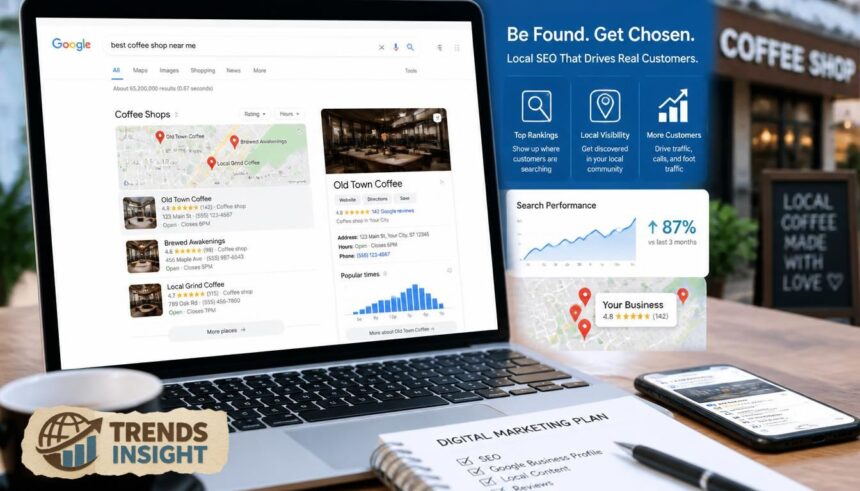
Local search has become an important part of how people discover businesses, services, publishers, and useful information online. When someone searches for a service, place, company, or topic connected to a particular area, search engines try to provide results that are relevant to both the query and the user’s location.
- BIO
- What Local Search Visibility Means
- Why Local Visibility Matters
- How Google Evaluates Local Results
- Create Content Around Local Search Intent
- Use Local Keywords Naturally
- Build High-Quality Local Content
- Improve On-Page SEO
- Strengthen Internal Linking
- Earn Relevant Mentions
- Keep Information Accurate
- Make the Website Mobile Friendly
- Use Structured Data Carefully
- Publish Original Local Reporting
- Avoid Common Local SEO Mistakes
- Keyword Stuffing
- Thin Content
- Duplicate Pages
- Outdated Information
- Irrelevant Backlinks
- Ignoring Search Intent
- Measure Performance
- Build Topic Clusters
- Keep Updating Strong Articles
- Create a Practical Local SEO Workflow
- A Simple Checklist for DGMNews
- Final Thoughts
- Nicolette Dellanno Net Worth and How She Built Her Career
- FAQs
For websites and publishers such as DGMNews, this creates an opportunity to reach readers who are searching with a local intent. However, appearing in local search is not simply about adding a city name to every page. Strong visibility comes from useful content, accurate information, good website structure, technical accessibility, and signals that help search engines understand what a website covers.
The idea behind visibility in local searches dgmnews is therefore broader than a single keyword. It involves building a reliable online presence that makes content easier for search engines to understand and easier for readers to discover.
BIO
| Label | Information |
|---|---|
| Topic | Visibility in Local Searches DGMNews |
| Category | Digital Marketing |
| Subcategory | Local SEO |
| Main Purpose | Improve local search visibility |
| Target Audience | Local businesses |
| Key Focus | Search presence and discoverability |
| Local SEO | Helps businesses reach nearby customers |
| Business Profile | Supports accurate online business details |
| Search Ranking | Affects how businesses appear locally |
| Customer Reach | Connects businesses with local audiences |
| Online Presence | Builds stronger local visibility |
| Key Benefit | More opportunities to be found locally |
What Local Search Visibility Means
Local search visibility refers to how easily a website, business, publication, or piece of content can be discovered when people conduct searches connected to a particular geographic area.
For example, a person might search for a local business, a nearby service, a regional event, or news about a particular city. Search engines use different signals to determine which results are useful for that search.
Google states that local results are primarily influenced by relevance, distance, and prominence. Relevance concerns how well a result matches the search, distance concerns the relationship between the result and the searcher’s location, and prominence relates to how well known or established the result is.
For a publisher, this means local SEO should begin with a clear understanding of the audience. Instead of creating pages simply because a location keyword has search volume, the content should answer a genuine question or provide useful information connected to that location.
Why Local Visibility Matters

People often use search engines when they need information quickly. A local search can have a particularly clear purpose because the user may already have a location, service, or community in mind.
A website that consistently publishes useful and relevant regional content can become easier for both readers and search engines to understand. Over time, this can support stronger organic discovery.
Local visibility can help a publication:
- Reach readers searching for regional information
- Increase relevant organic traffic
- Build recognition within a particular community
- Strengthen topical authority
- Improve the discovery of individual articles
- Create opportunities for returning readers
However, rankings should not be viewed as the only measure of success. Useful traffic, engaged readers, accurate information, and a trustworthy publication are equally important parts of a sustainable SEO strategy.
How Google Evaluates Local Results
Understanding the basic principles behind local search makes SEO decisions much easier.
Relevance
Relevance describes how closely a result matches what the person searched for. Google recommends providing complete and detailed information so it can better understand what a business or local entity represents.
For content publishers, the same principle can be applied through clear topical coverage.
An article about a local event should clearly explain the event, location, date, people involved, and other information readers actually need. A story about a regional issue should provide enough context for someone unfamiliar with the subject.
The goal is not to mention a location repeatedly. The goal is to make the purpose and local relevance of the content obvious.
Distance
Distance is especially important for searches involving physical businesses and places. Google explains that distance can be calculated from the location included in a search or from information about where the searcher is located.
This means two people searching for the same local service can sometimes see different results.
For publishers, geographic relevance can still matter when covering local stories. Mentioning the correct city, neighborhood, region, or venue where it genuinely belongs gives readers useful context and helps establish the subject of the article.
Prominence
Prominence concerns how well known a business or place is. Google notes that prominence can be influenced by information found across the web, including links, articles, directories, reviews, and other signals.
For a publication, this highlights the importance of building a genuine reputation rather than trying to manufacture rankings through shortcuts.
High-quality references, legitimate mentions, useful articles, and consistent publishing can all contribute to a stronger online presence.
Create Content Around Local Search Intent
One of the most practical ways to improve local visibility is to understand why someone is searching.
Consider a search such as “things to do in Lahore this weekend.” The user probably wants current, practical information. A page that simply repeats the phrase “things to do in Lahore” without providing useful recommendations would not satisfy that intent.
A stronger article might explain relevant activities, dates, locations, costs where appropriate, transportation considerations, and other details that help the reader make a decision.
Before writing an article, ask:
What does the reader actually want to know?
That question is more useful than asking how many times a keyword can be inserted into a page.
Use Local Keywords Naturally
Keyword research remains useful, but keywords should guide content rather than control it.
A local keyword can include:
- A city or region
- A neighborhood
- A service and location combination
- A locally relevant question
- A regional event or topic
- A location-specific long-tail phrase
For example, instead of repeatedly writing the same phrase, an article can naturally use related terms such as local news, regional updates, nearby events, city information, community activities, or area-specific services when those phrases genuinely fit the subject.
Natural language is usually easier for readers to understand and easier for writers to maintain.
Keyword stuffing can make an article awkward and reduce its usefulness. The objective should always be to create a page that sounds like it was written for people first.
Build High-Quality Local Content
A strong local content strategy needs more than location names.
Readers expect useful details. If an article discusses a local event, for instance, the information should answer practical questions such as what is happening, where it is happening, when it is happening, and why it matters.
Local content can include:
- Community news
- Regional developments
- Local guides
- Event coverage
- Neighborhood information
- Interviews
- Local business features
- Area-specific explainers
- Regional trends
- Practical location-based guides
The best topics are usually those where local knowledge adds genuine value.
For DGMNews, this means developing a recognizable editorial focus rather than publishing disconnected articles simply because individual keywords appear attractive.
Improve On-Page SEO
On-page SEO helps search engines and readers understand a page.
Start with a clear title that accurately describes the article. The primary topic should be obvious without making the title sound forced.
Headings should then organize the article into logical sections. Short paragraphs can improve readability, particularly for people reading on mobile devices.
Other important elements include:
- Descriptive page titles
- Useful meta descriptions
- Clear heading structure
- Descriptive URLs
- Relevant internal links
- Original and helpful content
- Proper image descriptions where appropriate
Google’s Search documentation explains that search appearance can be influenced through elements such as title links and structured data, although search features are not guaranteed simply because a site implements them.
Strengthen Internal Linking
Internal links are often overlooked in local SEO.
Suppose DGMNews publishes several articles about the same city. One article could naturally connect to another article covering a related event, local trend, or background story.
This creates a stronger relationship between pages.
Good internal linking can help readers discover additional information while also giving search engines more context about how topics across a website relate to one another.
Anchor text should be descriptive and natural. Avoid creating links simply to insert keywords.
A useful internal link answers the question:
Would this link help the reader understand the topic better?
If the answer is yes, it is probably worth considering.
Earn Relevant Mentions
External references can also contribute to a website’s broader online presence.
Google says prominence in local results can include information gathered from across the web, such as links, articles, and directories.
For a publisher, this makes genuine editorial relationships valuable.
A local organization might reference an article because it contains useful information. Another publication might cite a report. A community organization might mention relevant coverage.
These kinds of references are more meaningful than collecting large numbers of unrelated links.
Quality and relevance matter more than simply increasing the number of backlinks.
Keep Information Accurate
Accuracy is especially important for local content because details can change quickly.
Opening hours, event dates, addresses, public information, prices, and contact details can become outdated. An article that was accurate when published can gradually lose value if nobody updates it.
Create a regular review process for important evergreen pages.
When updating an article, check:
- Dates
- Locations
- Names
- Contact information
- Statistics
- Links
- Images
- References
- Statements that may have changed
Google explains that information shown in local results can come from multiple sources, including public web content, third-party data, users, and information provided through business profiles.
That makes consistency particularly important.
Make the Website Mobile Friendly
Local searches are frequently performed when people are away from their desks. A slow or difficult mobile experience can therefore become a serious usability problem.
A mobile-friendly website should have readable text, straightforward navigation, properly sized images, and pages that load efficiently.
Readers should not have to zoom repeatedly, close unnecessary pop-ups, or wait too long for basic content.
Mobile optimization is not just an SEO task. It is part of providing a better experience for the audience.
Use Structured Data Carefully
Structured data provides search engines with standardized information about the content of a page.
Google explains that structured data can help it understand page content and may make pages eligible for certain richer search appearances. However, implementing structured data does not guarantee that a rich result will appear.
For a news or blog publisher, relevant Article or NewsArticle structured data may help search engines understand information such as the article headline, author, publication date, and modified date.
The markup should accurately represent the visible page content.
It should never be treated as a shortcut for weak content.
Publish Original Local Reporting
Local search becomes much more valuable when a website offers information that readers cannot easily find elsewhere.
Instead of rewriting the same announcement available on dozens of websites, consider adding original context.
That might involve:
- Speaking with relevant people
- Examining publicly available information
- Adding local context
- Explaining complicated developments
- Comparing changes over time
- Answering common community questions
Originality gives local content a reason to exist.
For DGMNews, developing recognizable editorial value can be more sustainable than producing large amounts of generic location-based content.
Avoid Common Local SEO Mistakes
Some local SEO problems come from trying too hard to optimize.
Keyword Stuffing
Repeating the same phrase throughout an article can make the writing unnatural. Keywords should appear where they make sense.
Thin Content
A short page that provides little useful information may struggle to satisfy readers, especially when competing pages offer more complete coverage.
Duplicate Pages
Creating nearly identical pages for multiple locations can create a poor user experience when each page offers little unique value.
Outdated Information
Old dates, incorrect addresses, and expired information can quickly damage the usefulness of local content.
Irrelevant Backlinks
A large number of unrelated links does not automatically create authority. Links should come from genuinely relevant sources.
Ignoring Search Intent
A page can target a keyword accurately while still failing to answer what the searcher actually wanted.
The better approach is to start with the reader and work backward toward SEO.
Measure Performance
SEO should be measured rather than based on assumptions.
Google Search Console can provide information about how a site performs in Google Search. Useful metrics include impressions, clicks, click-through rate, and search queries.
For local content, it can be useful to monitor which locations and topics generate impressions and clicks.
Look for patterns.
Perhaps articles about local events perform well. Perhaps practical guides attract more search traffic than opinion pieces. Perhaps older articles receive impressions but few clicks because their titles no longer match search intent.
These observations can guide future editorial decisions.
SEO data should inform content strategy, not replace editorial judgment.
Build Topic Clusters
A website becomes easier to navigate when related articles are connected around broader subjects.
For example, a publication covering one city might develop a group of related pages covering:
- Local events
- Community news
- Business developments
- Transportation
- Food and entertainment
- Neighborhood guides
- Local history
Each individual article can address a specific question while connecting to broader coverage.
This approach helps create depth rather than relying on isolated pages.
Keep Updating Strong Articles
Publishing an article is not always the end of its SEO life.
Some pages can continue attracting readers for months or years if they remain useful.
Review high-performing articles periodically and ask:
Is this still accurate?
Can the explanation be clearer?
Are important developments missing?
Can related articles be connected?
Does the title still accurately describe the content?
Updating a useful article is often more valuable than producing another page covering exactly the same subject.
Create a Practical Local SEO Workflow
A simple workflow can keep local SEO manageable.
Start by identifying a genuine topic with local relevance. Research what readers want to know and examine existing coverage. Choose a primary search phrase naturally related to the topic.
Next, create an informative article with a clear structure. Include useful local details without forcing keywords into every paragraph.
After publication, review the page for technical problems, mobile usability, internal links, and accuracy.
Then monitor performance through search data.
Over time, use those observations to improve future content.
This creates a cycle:
Research → Write → Publish → Measure → Improve
That process is more sustainable than constantly chasing individual keywords.
A Simple Checklist for DGMNews
Before publishing a locally focused article, check the following:
- Clear topic: Does the article have one understandable purpose?
- Search intent: Does it answer the reader’s actual question?
- Local relevance: Is the geographic connection genuine?
- Original value: Does it add information or context?
- Title: Does the title accurately describe the page?
- Headings: Are sections easy to scan?
- Keywords: Are they used naturally?
- Internal links: Are related articles connected?
- Accuracy: Are dates, names, places, and facts current?
- Mobile experience: Is the page easy to read on a phone?
- Structured data: Is relevant markup implemented accurately?
- Measurement: Will performance be monitored after publication?
Final Thoughts
Improving visibility in local searches dgmnews is not about finding one secret ranking technique. Local search visibility develops through a combination of relevance, useful content, accurate information, strong website structure, genuine authority, and consistent improvement.
Google’s own guidance identifies relevance, distance, and prominence as the main factors behind local results, while its broader search documentation emphasizes useful information, search relevance, usability, and trustworthy sources.
For DGMNews, the practical lesson is straightforward: create content that genuinely deserves to be found.
Understand the local audience. Cover topics with real value. Use keywords naturally. Keep important information updated. Build connections between related articles. Earn legitimate references instead of chasing shortcuts. And use search data to understand what readers respond to.
Strong local SEO is ultimately about making useful information easier for the right people to discover. When that principle remains at the center of the strategy, search optimization becomes part of good publishing rather than something separate from it.
Nicolette Dellanno Net Worth and How She Built Her Career
FAQs
What is visibility in local searches dgmnews?
It refers to how easily DGMNews content can be discovered when people search for information connected to specific cities, regions, or local topics.
Why is local SEO important for DGMNews?
Local SEO can help DGMNews reach readers looking for regional information by improving content relevance, website structure, and local search discoverability.
How can DGMNews improve local search visibility?
DGMNews can focus on useful local content, natural keywords, accurate information, internal linking, mobile usability, and relevant external references.
Do local keywords improve search visibility?
They can help search engines understand geographic relevance when used naturally. Keywords should support the topic rather than be repeated unnecessarily.
How can local SEO performance be measured?
Search Console and analytics tools can help monitor impressions, clicks, search queries, traffic, and other signals that show how local content performs.