


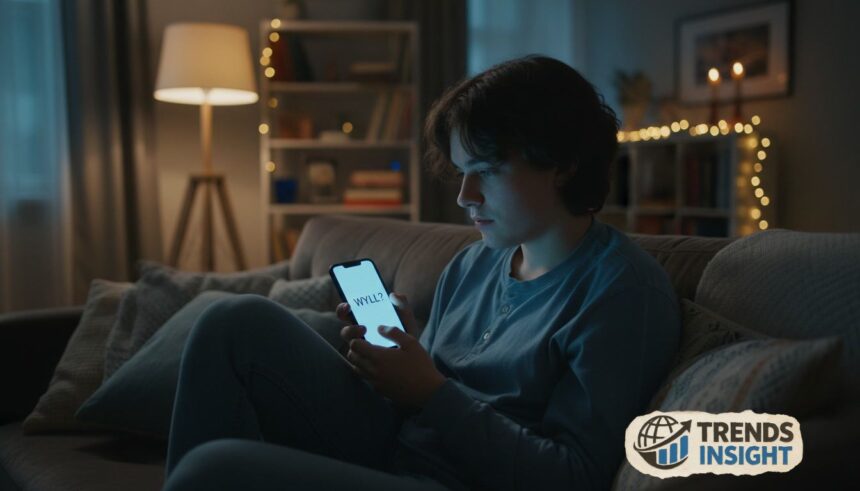
You’ve been chatting with someone for a few days. The conversation feels easy. Then, out of nowhere, a short message pops up: “wyll?”
If that three-letter question has ever left you staring at your phone, you’re not alone. WYLL meaning has become one of the most common pieces of modern texting slang, especially among younger users on Snapchat, Instagram, and regular text threads. This article breaks down exactly what it means, where it came from, how people actually use it, and how you can handle it without awkwardness.
BIO
| Label | Information |
|---|---|
| Full Form | What You Look Like |
| Type | Texting and social media slang |
| Main Purpose | Asking for a photo or description |
| Common Platforms | Snapchat, Instagram, text messages |
| First Popular Use | Around 2020 |
| Typical Users | Teens and young adults |
| Tone | Casual and direct |
| Usual Request | Selfie or short appearance details |
| Common Response | Photo, description, or polite decline |
| Related Terms | WYD, HBU, pics |
| Key Point | No one is required to send a photo |
| Safety Note | Share only if you feel comfortable |
| Overall Feel | Quick way to ask about appearance |
What WYLL Actually Stands For
WYLL is a straightforward abbreviation. It stands for “What You Look Like” or, more fully, “What do you look like?”
When someone sends it, they are asking for a photo or a description of your appearance. The request is casual by design. People type it quickly because writing out the full question feels longer and more formal than the conversation usually is.
The letters are almost always written in lowercase or mixed case—“wyll,” “WYLL,” or “Wyll.” The punctuation varies too. Some people add a question mark. Others leave it bare. Either way, the intent stays the same.
How the Term Started Spreading
WYLL began showing up regularly in online chats around 2020. It grew out of the same need that created other short forms of speech online: speed and ease. Typing “What do you look like?” takes more effort than three letters, especially on a phone.
The abbreviation found its strongest foothold on Snapchat. That platform is built around photos and short videos that disappear, so asking someone to show their face feels natural there. From Snapchat it moved into Instagram direct messages, regular texting apps, and other chat platforms.
Dictionaries and slang trackers eventually took notice. Merriam-Webster lists it as an initialism meaning “What (do) you look like?” Urban Dictionary and other informal sources recorded the same definition years earlier. The term is no longer niche. It has become part of everyday digital conversation for a large group of people.
Where You Are Most Likely to See It
WYLL appears most often in one-on-one conversations between people who have never met in person. Common situations include:
- Talking to someone new on a dating app or social media
- Continuing a chat that started through mutual friends
- Messaging after following each other or reacting to stories
On Snapchat the request is frequently followed by an expectation of a quick selfie or video snap. On Instagram it usually shows up in direct messages after someone has replied to a story or commented on a post. In plain text messages it can feel slightly more direct because there is no built-in photo culture the way there is on Snapchat.
The timing matters. Some people ask early in a conversation. Others wait until they have talked for days or weeks. The later requests tend to feel more natural to many people.
Real Examples of How People Use It
Here are a few realistic ways the phrase shows up in actual messages:
“We’ve been talking for a while now, wyll?”
“You seem cool. Wyll?”
“I still don’t know what you look like lol wyll”
“After all these chats I gotta ask—wyll?”
Sometimes it appears with extra words for softness: “I’m curious, wyll if you don’t mind.” Other times it stands alone and can feel abrupt.
People also use it playfully with friends. A group chat might include “wyll in that outfit” as a light tease rather than a serious request for a photo.
Why Someone Asks in the First Place
Curiosity is the most common reason. When two people have only exchanged words, it is natural to wonder about the face behind the messages. Appearance is one of the first things people notice when they meet offline, so the question fills that gap online.
In some cases the ask is flirty. The person wants to know if there is physical attraction before investing more time. In other cases it is practical. Someone planning a real-life meeting may simply want a clearer picture of who they will be meeting.
There are less comfortable reasons too. A few people ask almost immediately, treating appearance as the only thing that matters. Others use the question as a way to pressure for photos. Context and timing usually make the difference clear.
How the Question Lands With Different People
Not everyone receives the request the same way. Many users, especially women, have said they feel annoyed when “wyll” is one of the first things someone asks. Merriam-Webster notes that a large share of its recorded examples come from people expressing frustration with the question.
Others treat it as normal. If the conversation has already been friendly and respectful, the request can feel like a natural next step. The difference often comes down to whether the person asking has already shown interest in personality, humor, or shared topics before jumping to appearance.
Practical Ways to Respond
You never have to send a photo just because someone asked. Your comfort level decides the answer. Here are several clear options that work in real conversations:
Send a recent selfie if you feel fine doing so. Many people simply reply with a picture and a short caption.
Describe yourself in words instead. A short description of hair, height, style, or general look can satisfy the question without a photo.
Turn the question around. “I’ll show you if you show me first” keeps the exchange balanced.
Decline politely. “I’m not really big on sending pics yet” or “Maybe later once we’ve talked more” sets a boundary without drama.
Ignore the message if it feels off. You are under no obligation to reply to every request.
Joke about it if the tone of the chat has been light. A playful answer can defuse any awkwardness.
The best response matches the relationship you already have with the person. Early strangers usually warrant more caution than someone you have been chatting with for weeks.
Safety Points Worth Remembering
Online conversations carry real risks. Once a photo leaves your device, you cannot fully control where it goes. Many people choose to wait until they know someone better before sharing clear face pictures.
If the request comes with pressure, repeated asking, or guilt-tripping, that is a clear signal to step back. Blocking or ending the chat is always an available choice. Your privacy belongs to you.
Parents and caregivers sometimes look up this slang because teens use it heavily. The same advice applies across ages: no one is required to send photos of themselves, and discomfort is a valid reason to say no.
Related Slang That Often Appears Nearby
WYLL does not exist in isolation. It sits alongside other short texting terms:
WYD means “What you doing.” It asks about current activity rather than appearance.
HBU stands for “How about you.”
ASL once meant “Age, Sex, Location” and was common in older chat rooms.
Pics or “send pics” is a more direct version of the same request.
Knowing these helps you read the full tone of a conversation. A message that mixes “wyd” with later “wyll” often feels more natural than an isolated appearance question.
When It Makes Sense to Ask Someone Else
If you are the one curious about another person’s appearance, timing and wording matter. Waiting until the conversation has some substance usually lands better. Softening the question—“I’m curious what you look like if you’re okay sharing”—gives the other person room to decline without tension.
Asking right after the first “hi” tends to shut conversations down for many people. Building a little rapport first keeps the exchange more balanced.
The Bigger Picture Behind the Acronym
WYLL reflects how digital communication works today. People meet through screens first. Words travel faster than faces. The abbreviation is simply a tool people use to close that gap.
At the same time, it highlights ongoing questions about privacy, consent, and what counts as respectful online behavior. Appearance matters to most people, yet reducing someone to a photo request too early can feel shallow or demanding.
Understanding the WYLL meaning helps you navigate both sides of the exchange with clearer eyes. You know what is being asked. You know you have choices in how to answer. And you know that a short string of letters does not entitle anyone to more than you are willing to give.
The next time the message appears on your screen, you can read it for what it is: a casual request for information about appearance. Whether you answer with a photo, a description, a joke, or a polite decline is entirely up to you.
Megan Fox Alan Ritchson Wife Myth: Facts Behind the Stories
FAQs
What does WYLL mean in texting?
WYLL stands for “What You Look Like.” People use it when they want a photo or a quick description of your appearance during a chat.
Is it rude to ask someone WYLL?
It depends on timing and tone. Asking early can feel abrupt, while waiting until you’ve talked for a while usually feels more natural and respectful.
How should I reply if someone sends WYLL?
You can send a selfie, describe yourself in words, ask them to share first, or politely decline. Your comfort level decides the best answer.
Where is WYLL used most often?
It shows up frequently on Snapchat, Instagram DMs, and regular text messages, especially between people who have never met in person.
Does WYLL always mean someone wants a photo?
Most of the time yes, but some people accept a short written description instead. The request is usually about appearance either way.